
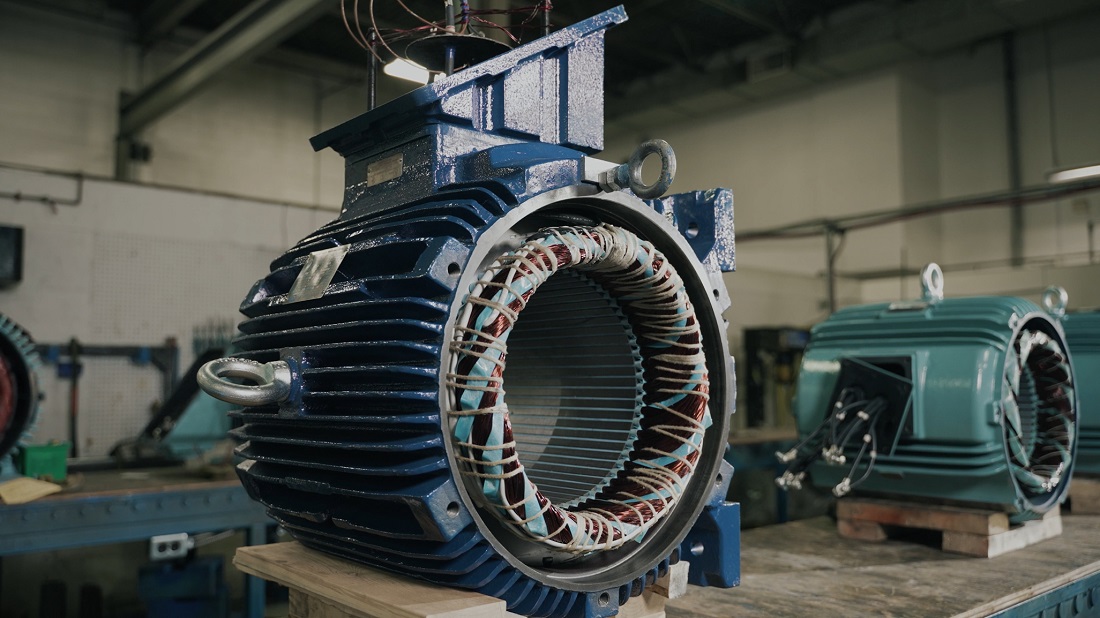

Motors are the unseen powerhouses of modern life. From household appliances and industrial machinery to electric vehicles and robotics, motors convert energy into motion and make complex systems function smoothly. Understanding how motors work, their types, and their applications provides valuable insight into the technologies that shape everyday life.
What Is a Motor?
A motor is a device that converts electrical, chemical, or thermal energy into mechanical energy. This mechanical output is typically rotational motion, which can then be used to drive wheels, fans, pumps, conveyors, or tools.
At their core, motors rely on fundamental principles of physics such as electromagnetism, combustion, or fluid dynamics, depending on their type.
Major Types of Motors
Motors come in many forms, each designed for specific applications and performance requirements.
Electric Motors
Electric motors are the most widely used type today due to their efficiency, reliability, and scalability.
Common electric motor types include:
-
AC Motors – Operate on alternating current and are widely used in industrial and household applications
-
DC Motors – Use direct current and provide precise speed control
-
Brushless Motors – Known for low maintenance and high efficiency
-
Servo Motors – Used for accurate position and motion control
-
Stepper Motors – Move in discrete steps, ideal for automation and CNC systems
Internal Combustion Motors
These motors generate mechanical power by burning fuel such as gasoline or diesel.
Key characteristics:
-
High power output
-
Commonly used in vehicles and heavy machinery
-
Dependence on fossil fuels
-
Higher emissions compared to electric motors
Hydraulic and Pneumatic Motors
These motors use pressurized fluids or air to create motion and are commonly found in industrial and heavy-duty environments.
Advantages include:
-
High torque at low speeds
-
Durable in harsh conditions
-
Suitable for explosion-prone environments
Key Components of a Motor
While designs vary, most motors share several essential components:
-
Stator – The stationary part that creates a magnetic field
-
Rotor – The rotating component that delivers mechanical motion
-
Shaft – Transfers motion to the driven load
-
Bearings – Reduce friction and support rotation
-
Windings or Magnets – Generate electromagnetic force
How Motors Work
Electric motors operate on the interaction between magnetic fields and electric current. When current flows through a conductor within a magnetic field, a force is produced, causing the rotor to turn. This continuous interaction results in sustained rotational motion.
In combustion motors, controlled explosions push pistons that rotate a crankshaft, converting linear motion into rotational energy.
Applications of Motors
Motors are essential across nearly every sector:
-
Home appliances – Washing machines, refrigerators, fans
-
Transportation – Cars, trains, drones, aircraft systems
-
Industry – Conveyors, pumps, compressors, robotic arms
-
Healthcare – Medical imaging, surgical tools, ventilators
-
Renewable energy – Wind turbines, solar tracking systems
Advantages of Modern Motors
Technological advancements have significantly improved motor performance.
Notable benefits include:
-
Higher energy efficiency
-
Reduced maintenance requirements
-
Improved precision and control
-
Lower noise and vibration
-
Compatibility with automation and smart systems
Energy Efficiency and Sustainability
Modern motors are designed to minimize energy loss and environmental impact. High-efficiency motors consume less electricity, reduce operating costs, and support sustainability goals. The growing adoption of electric motors in vehicles is also playing a major role in reducing greenhouse gas emissions.
Future of Motor Technology
The future of motors is shaped by innovation and digital integration. Trends such as smart motors, AI-based control systems, and advanced materials are enabling higher performance, predictive maintenance, and seamless integration with connected systems.
As industries move toward automation and electrification, motors will continue to evolve as a cornerstone of technological progress.
Frequently Asked Questions (FAQs)
1. What is the difference between an AC motor and a DC motor?
AC motors run on alternating current and are commonly used for constant-speed applications, while DC motors use direct current and offer better speed control.
2. Why are brushless motors more efficient than brushed motors?
Brushless motors eliminate physical brushes, reducing friction, heat, and maintenance while improving efficiency and lifespan.
3. How do servo motors differ from stepper motors?
Servo motors use feedback systems for precise positioning, while stepper motors move in fixed steps without feedback.
4. What factors should be considered when selecting a motor?
Key factors include power rating, speed, torque, efficiency, operating environment, and control requirements.
5. Are electric motors more environmentally friendly than combustion motors?
Yes, electric motors produce no direct emissions and are generally more energy-efficient, especially when powered by renewable energy.
6. How long does a typical motor last?
Motor lifespan varies by type and usage, but well-maintained electric motors can operate reliably for decades.
7. What role do motors play in automation?
Motors provide controlled motion and power for robotic systems, conveyors, and automated machinery, making modern automation possible.

Comments are closed.