
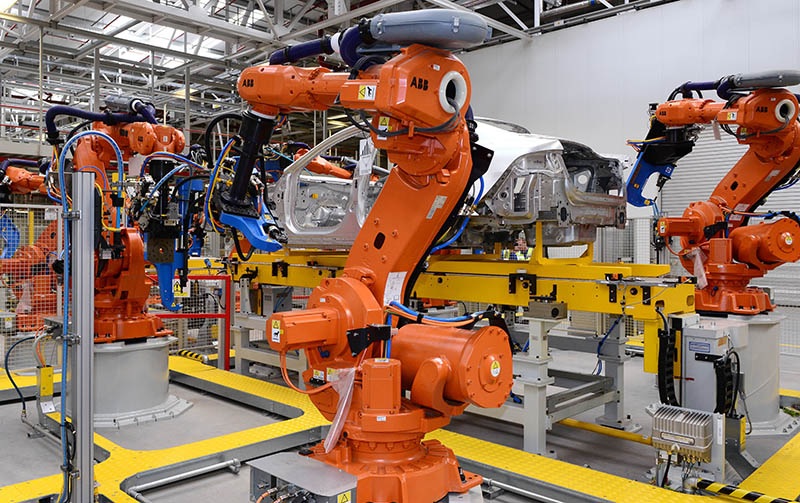

For over a century, the moving assembly line stood as the undisputed symbol of automotive manufacturing. While the foundational concept of sequential assembly remains intact, the machinery executing these operations has undergone a profound transformation. Today’s automotive production facilities function less like traditional grimy factories and more like highly synchronized, pristine supercomputers. Advanced manufacturing equipment is no longer solely focused on increasing raw output speed; it is engineered to achieve microscopic precision, manage endless vehicle customization, and adapt to the staggering complexities introduced by electric and autonomous vehicle architectures.
The transition from strictly mechanical assembly to digitally integrated manufacturing is rewriting the rules of how vehicles are conceived, built, and quality-tested. By leveraging intelligent robotics, additive manufacturing, and real-time data analytics, automakers are eliminating historical bottlenecks and pushing the boundaries of automotive engineering.
The Evolution of Robotics: From Blind Repetition to Intelligent Collaboration
Heavy industrial robots have been a staple of car manufacturing since the late twentieth century, primarily utilized for dangerous, repetitive tasks like spot welding and heavy lifting. However, those legacy machines were essentially blind, executing rigid, pre-programmed coordinates regardless of minor environmental variables. Modern automotive robotics operate on a completely different paradigm of intelligence and adaptability.
The Rise of Collaborative Robots
One of the most significant shifts on the factory floor is the widespread deployment of collaborative robots, commonly known as cobots. Unlike traditional industrial arms that must be isolated behind heavy steel cages for human safety, cobots are designed to work directly alongside human technicians. They are equipped with advanced force-limiting sensors and capacitive skins that immediately halt their movement if they detect unexpected physical contact.
This safety profile allows manufacturers to blend the heavy-lifting capabilities of a machine with the complex decision-making skills of a human worker. A cobot might support the grueling weight of a panoramic glass roof while a human technician performs the delicate, tactile work of securing the wiring harness and aligning the weather stripping. This synergy drastically reduces workplace injuries, mitigates physical fatigue, and dramatically accelerates the assembly of highly detailed interior cabins.
AI-Powered Machine Vision
Modern robotic arms are now frequently paired with high-resolution, AI-driven machine vision systems. These cameras and laser scanners act as the eyes of the production line. Instead of blindly swinging to a programmed spatial coordinate, a vision-equipped robot scans the chassis in real-time, calculates the exact placement of a component to the fraction of a millimeter, and adjusts its own trajectory instantly. This technology is particularly vital in gap and flush management, ensuring that every door, hood, and trunk lid aligns perfectly on every single vehicle, eliminating the inconsistent panel gaps that plagued older manufacturing eras.
Additive Manufacturing: Moving Beyond Rapid Prototyping
Historically, 3D printing in the automotive sector was relegated strictly to the design studio, used to create rapid plastic prototypes before committing to expensive metal tooling. Today, additive manufacturing has matured into robust, industrial-grade equipment capable of printing complex metals, carbon-reinforced polymers, and aerospace-grade ceramics directly onto the production floor.
The most immediate impact of additive manufacturing is seen in custom tooling and jigs. In traditional manufacturing, creating a custom steel bracket to hold a specific door panel during assembly requires weeks of machining and thousands of dollars. With industrial 3D printers, line managers can design, print, and implement a custom, highly durable polymer jig overnight.
Furthermore, automakers are utilizing metal binder jetting and laser powder bed fusion to create end-use vehicle components that would be physically impossible to manufacture using traditional casting or milling. Engineers can now design internal structural nodes using topology optimization—a mathematical approach that removes all unnecessary material, leaving a skeletal, organic-looking component that is incredibly lightweight yet structurally superior to a solid block of steel. This weight reduction is critical for electric vehicles, where every saved ounce translates directly into increased battery range.
Advanced Material Joining for the Lightweight Era
As the industry pivots toward extreme fuel efficiency and heavy lithium-ion battery packs, automakers are abandoning the all-steel chassis. Modern vehicles are built using a complex matrix of materials, integrating high-strength boron steel, stamped aluminum, magnesium, and carbon fiber composites. Joining these dissimilar materials presents a massive manufacturing challenge; traditional spot welding simply destroys aluminum and melts carbon fiber.
To solve this, factories are installing highly advanced material joining equipment. Precision laser brazing is now utilized to join roof panels to side structures, melting a filler wire via a concentrated laser to create a perfectly smooth, continuous seam that requires zero plastic body filler and improves the vehicle’s structural rigidity.
For mixed materials, manufacturers utilize automated systems that combine structural aerospace adhesives with self-piercing rivets (SPRs) or flow-drill screws. The equipment applies a bead of highly resilient adhesive between an aluminum panel and a steel frame, and a robotic arm instantly drives a specialized rivet through the materials to lock them together while the adhesive cures. This creates a bond that is actually stronger than the surrounding metal, vastly improving the vehicle’s crash survivability and overall torsional stiffness.
The Industrial Internet of Things and Predictive Maintenance
A modern automotive assembly plant contains thousands of interconnected machines, from massive hydraulic stamping presses to delicate automated guided vehicles (AGVs) delivering parts across the floor. The integration of the Industrial Internet of Things (IIoT) means that every piece of equipment is now laced with sensory hardware monitoring vibration, temperature, acoustic output, and electrical draw.
This continuous stream of raw data feeds into central, cloud-based algorithms to facilitate predictive maintenance. In the past, a factory operated on preventative maintenance—shutting down the line on a strict schedule to replace parts whether they needed it or not—or reactive maintenance, waiting for a machine to break and cause a catastrophic, multi-million-dollar line stoppage.
Predictive maintenance equipment changes the equation entirely. If the acoustic sensor on a robotic welding arm detects a microscopic change in the frequency of its internal gear bearings, the system flags the anomaly weeks before a physical failure can occur. Maintenance crews can then surgically replace the failing bearing during a scheduled shift change, ensuring that the assembly line never stops moving during active production hours.
Digital Twins: Simulating Reality Before Production Begins
Perhaps the most revolutionary piece of advanced manufacturing equipment is not a physical machine at all, but a virtual one. Before a modern automaker pours a single yard of concrete for a new factory or installs a new robotic cell, they build a digital twin.
A digital twin is a hyper-accurate, fully functional virtual simulation of the entire manufacturing facility. Engineers use this software environment to perform virtual commissioning. They can program robotic pathways, test conveyor belt speeds, and simulate a full year of production runs within a matter of hours. By running these advanced simulations, manufacturers can identify physical bottlenecks, robotic collisions, and ergonomic issues in the digital realm. Resolving a clearance issue in a software simulation costs virtually nothing, whereas fixing that same issue after heavy machinery is bolted to the factory floor costs millions and delays vehicle launches by months.
The automotive industry is in the midst of its most aggressive technological renaissance since the invention of the assembly line itself. The deployment of advanced manufacturing equipment represents a fundamental shift in how human ingenuity scales. By blending the tireless precision of intelligent robotics with the flexibility of 3D printing and the foresight of predictive analytics, manufacturers are ensuring that the vehicles of tomorrow are safer, vastly more efficient, and constructed with a level of perfection that was previously unimaginable.

Comments are closed.