
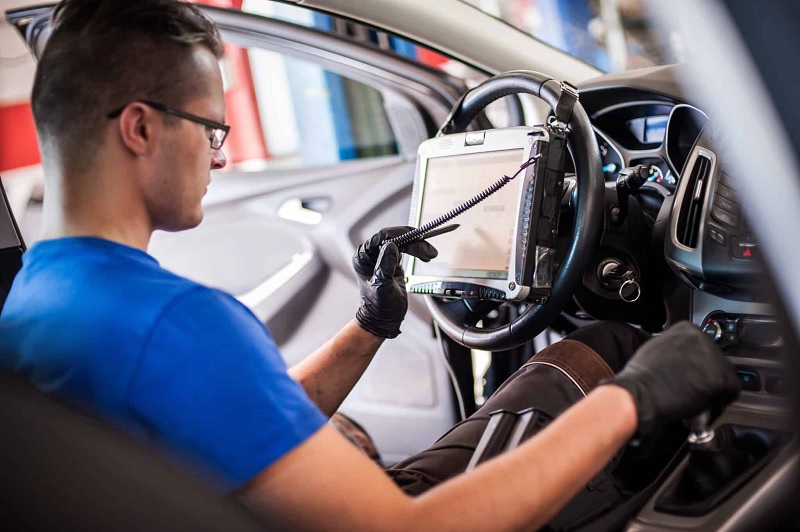

For decades, automotive performance was defined almost entirely by mechanical engineering. If a driver wanted faster acceleration, sharper handling, or better fuel economy, the solutions involved bolting on new parts, adjusting carburetors, or replacing worn suspension components. Today, the automotive landscape looks fundamentally different. Modern vehicles are highly sophisticated networks of computers, sensors, and electronic actuators rolling on four wheels. While physical hardware remains crucial, the true brain behind how a modern car accelerates, corners, and stops is entirely digital.
This dramatic shift has elevated vehicle calibration from a niche engineering term to one of the most critical aspects of automotive maintenance. Calibration is the invisible bridge between your vehicle’s physical components and its digital brain. When a vehicle is properly calibrated, it delivers the seamless, responsive, and safe driving experience the manufacturer intended. When it falls out of calibration, the resulting drop in performance can range from a minor annoyance at the gas pump to a catastrophic failure of critical safety systems.
The Evolution of Automotive Calibration
To understand the impact of calibration, it helps to look at how vehicles process information. At the heart of every modern car is the Electronic Control Unit (ECU), a powerful central computer that relies on data fed from dozens, sometimes hundreds, of specialized sensors throughout the vehicle. These sensors monitor everything from the density of the air entering the intake manifold to the exact rotational speed of each individual tire.
Calibration is the precise process of aligning, programming, and testing these sensors and control modules so they interpret physical reality accurately. If a sensor reads data incorrectly, the ECU will make operational decisions based on flawed information. This means that a physically perfect engine or a brand-new set of brakes can still perform poorly if the software controlling them is out of sync with the hardware.
Core Areas of Vehicle Calibration
Vehicle calibration is not a single process; it is a multi-layered discipline that impacts nearly every system in a modern automobile. Understanding these distinct areas reveals just how heavily we rely on accurate digital adjustments.
Engine and Powertrain Management
The most traditional form of calibration relates directly to the engine and transmission. Every time you press the accelerator, you are no longer pulling a physical cable connected to a throttle body. Instead, a sensor measures the exact angle of your foot and sends a request to the ECU. The computer then calculates the optimal mix of fuel, air, and ignition timing required to deliver that power smoothly and efficiently.
If engine sensors, such as the mass airflow sensor or oxygen sensors, lose their calibration over time, the vehicle may experience sluggish throttle response, rough idling, or erratic transmission shifting. The engine might run too rich, dumping excess fuel into the cylinders and ruining your fuel economy, or it might run too lean, causing internal temperatures to spike and potentially damaging internal components. Powertrain calibration ensures that the engine maximizes power output while minimizing emissions and fuel consumption.
Advanced Driver Assistance Systems (ADAS)
Perhaps the most crucial frontier in modern vehicle calibration is ADAS. These systems include features like adaptive cruise control, lane departure warnings, automatic emergency braking, and pedestrian detection. ADAS relies heavily on a complex array of forward-facing optical cameras, radar units housed behind the front grille, and ultrasonic sensors embedded in the bumpers.
Because these systems can autonomously apply the brakes or steer the vehicle to avoid a collision, their calibration must be flawless. If a windshield camera is misaligned by even a fraction of a degree, the vehicle’s computer might calculate that an oncoming car is several feet further away than it actually is. This tiny margin of error can be the difference between stopping safely and being involved in a severe accident.
Steering and Suspension Geometry
Gone are the days of purely hydraulic power steering. Most modern vehicles utilize Electronic Power Steering (EPS), which relies on a steering angle sensor to determine exactly which direction the driver intends to go. This sensor works in tandem with the vehicle’s electronic stability control and anti-lock braking system to keep the car planted during aggressive maneuvers or poor weather conditions.
If the steering angle sensor is not calibrated to recognize the true physical center of the wheels, the electronic stability control might engage at the wrong time, applying the brakes unevenly and causing the vehicle to pull sharply to one side. Similarly, cars equipped with adaptive electronic suspension systems require highly calibrated ride-height sensors to adjust the dampening of the shock absorbers in real-time, ensuring a smooth ride over rough pavement and tight body control through corners.
How Poor Calibration Impacts the Driver
The symptoms of a poorly calibrated vehicle are often misdiagnosed as physical hardware failures. Drivers may spend thousands of dollars replacing perfectly good parts when the root cause was a software or sensor misalignment.
One of the most noticeable impacts is a degradation in handling predictability. If the vehicle’s yaw sensors or wheel speed sensors are feeding erratic data to the stability control module, the driver might feel the car subtly fighting their inputs on winding roads. The vehicle may feel nervous or twitchy, lacking the planted, confident feel it had when it was new.
In vehicles with advanced ADAS, poor calibration often manifests as “phantom braking,” where the automatic emergency braking system suddenly activates because a misaligned radar sensor falsely identifies a shadow or a roadside sign as a stationary vehicle. Not only is this terrifying for the driver, but it can easily cause a rear-end collision with the car following behind.
Furthermore, improper calibration directly hurts your wallet. When an engine management system operates on skewed sensor data, the transmission will hold gears too long, and the fuel injectors will operate inefficiently. Over the course of a year, this invisible inefficiency can cost hundreds of dollars in wasted gasoline.
When Does a Vehicle Require Recalibration?
Unlike an oil change, which happens on a rigid mileage schedule, calibration is typically triggered by specific events in the lifespan of the vehicle. Knowing when to request a recalibration is key to maintaining peak performance.
Windshield Replacement The most common trigger for ADAS recalibration is replacing a cracked windshield. Because the primary forward-facing cameras are mounted directly to the glass behind the rearview mirror, replacing the windshield completely shifts their physical position. Even a millimeter of variance requires a technician to perform a dynamic or static recalibration to ensure the camera is aimed perfectly down the center of the road.
Collision Repairs Even minor fender benders can knock radar sensors and ultrasonic parking sensors out of alignment. Any time a vehicle’s front bumper, grille, or rear fascia is removed for bodywork or painting, a full recalibration of the embedded sensors is an absolute necessity before the vehicle is deemed safe to drive.
Suspension Modifications and Wheel Alignments If you replace the struts, install a lift kit, or even just get a standard four-wheel alignment, the physical geometry of the car changes. The steering angle sensor and the forward-facing cameras must be recalibrated to understand the vehicle’s new thrust angle and ride height. Failing to do so means the digital systems are operating under the assumption that the car is still sitting in its previous stance.
Preserving Automotive Integrity
The modern automobile is an engineering marvel, blending heavy industry with bleeding-edge computer science. As manufacturers continue to introduce higher levels of autonomous driving and complex electronic drivetrains, the importance of keeping these systems perfectly aligned will only grow.
Maintaining driving performance is no longer just about keeping fluids fresh and tires inflated. It requires a deep respect for the digital architecture that governs the vehicle. By understanding the role of vehicle calibration and ensuring that sensors and software are realigned after major services, repairs, or collisions, drivers can ensure their vehicles remain as safe, efficient, and exhilarating to drive as the day they left the factory floor.

Comments are closed.