
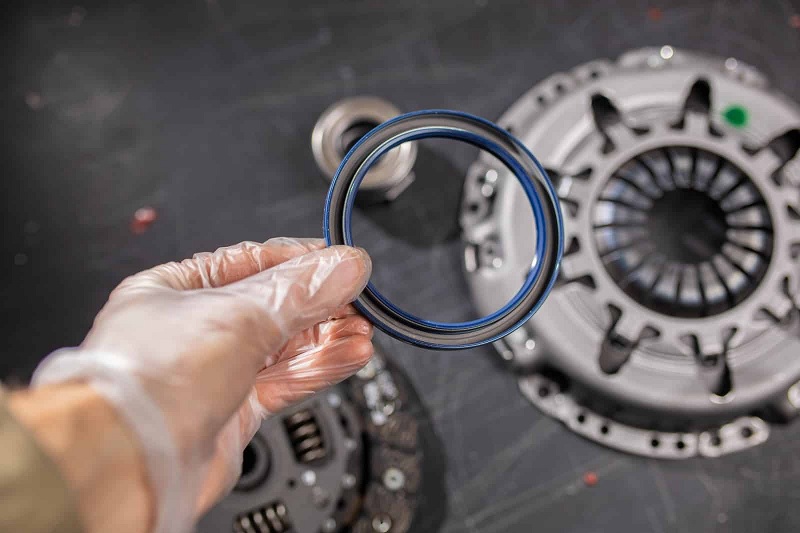

Most drivers only think about their vehicle’s internal fluids when a menacing puddle appears on the garage floor. Whether it is the dark, viscous slick of engine oil, the sweet-smelling neon green of escaping coolant, or the bright red pooling of transmission fluid, a leak is an immediate source of anxiety. While the instinct is to blame the engine block, the radiator, or the transmission housing, the true culprit is almost always the failure of a highly engineered, deeply hidden component: the automotive seal.
Automobiles are essentially complex hydraulic and mechanical networks relying on various fluids to lubricate moving parts, transfer hydraulic pressure, and regulate extreme temperatures. Keeping these vital fluids exactly where they belong, while simultaneously keeping outside contaminants like dirt and water out, is the primary job of automotive seals and gaskets. Understanding the engineering, material science, and design precision that goes into these deceptively simple components reveals just how critical they are to the survival and performance of any modern vehicle.
The Hostile Environment of the Modern Powertrain
To appreciate the importance of a properly designed seal, one must first understand the brutal environment in which it operates. The internal combustion engine and its supporting drivetrain components represent a torture chamber for pliable materials.
Seals are subjected to relentless thermal cycling. When a vehicle sits outside in a harsh winter night, the seals can freeze, becoming hard and brittle. Within ten minutes of starting the engine, those exact same seals are suddenly exposed to scorching temperatures well over two hundred degrees Fahrenheit. They must rapidly expand, maintain their flexibility, and preserve a perfect barrier under immense internal pressure.
Furthermore, these components face constant chemical exposure. Modern synthetic motor oils, highly corrosive brake fluids, and complex antifreeze mixtures contain aggressive detergent packages and chemical additives. A poorly designed seal, or one made from inferior materials, will suffer chemical degradation. The material will either swell and distort out of its housing, or dry out, shrink, and crack, completely compromising the fluid barrier.
Material Science: The Backbone of Effective Sealing
The days of utilizing simple cork or basic rubber gaskets in automotive manufacturing are long gone. The intense demands of modern powertrains have forced engineers to leverage advanced polymer chemistry and material science to create seals that can survive the lifespan of the vehicle.
Nitrile and Polyacrylate
For standard applications where temperatures remain relatively moderate, engineers often utilize Nitrile Rubber (NBR). Nitrile offers excellent resistance to petroleum-based oils and fuels, making it a reliable choice for general engine seals. However, as engine compartments have become tighter and operating temperatures have climbed to improve fuel efficiency, manufacturers have increasingly turned to Polyacrylate elastomers, which offer a higher thermal threshold and exceptional resistance to transmission fluids.
Fluoroelastomers and PTFE
In the most demanding zones of the powertrain, such as the rear main seal of the crankshaft or the valve stem seals nestled deep inside the cylinder head, premium materials are absolutely mandatory. Fluoroelastomers (FKM), commonly known by the brand name Viton, can withstand extreme heat and highly corrosive synthetic oil blends without degrading.
For the ultimate in low-friction, high-temperature sealing, engineers utilize Polytetrafluoroethylene (PTFE). PTFE seals are unique because they do not rely on a traditional metal tension spring to hold their shape against a rotating shaft. Instead, they feature a wide, flat lip that actually lays down a microscopic layer of PTFE onto the spinning metal shaft, creating a remarkably efficient, long-lasting barrier that thrives in low-lubrication environments.
The Mechanics of Dynamic Versus Static Sealing
Automotive seals generally fall into two distinct mechanical categories, each requiring a fundamentally different design approach to prevent leaks effectively.
Mastering the Static Seal
Static seals, such as cylinder head gaskets, valve cover gaskets, and oil pan seals, are placed between two stationary metal components. Their job is to fill the microscopic imperfections and machining grooves on the mating metal surfaces. While they do not have to contend with spinning shafts, they must survive immense clamping forces and varying rates of thermal expansion. For instance, an aluminum cylinder head expands at a different rate than a cast-iron engine block. A properly designed multi-layer steel head gasket must absorb this sheer stress while maintaining a flawless barrier against high-pressure combustion gases, pressurized oil, and flowing engine coolant simultaneously.
The Complexity of Dynamic Shaft Seals
Dynamic seals face a much more complicated task. These are the radial lip seals found on the front of the crankshaft, the transmission output shafts, and the wheel bearings. They must maintain a watertight and oil-tight barrier against a metal shaft that is spinning at thousands of revolutions per minute.
A perfectly designed dynamic seal does not actually rub dry against the metal shaft. Instead, the seal’s precisely angled lip is designed to ride on a microscopic, hydrodynamic film of the exact fluid it is trying to hold back. This fluid film acts as a liquid bearing, preventing the rubber from burning up due to friction. Furthermore, high-quality dynamic seals feature microscopic directional grooves molded into the rubber lip. As the shaft spins, these grooves act as a miniature pump, actively pushing any escaping oil back into the engine casing. If a manufacturer installs a cheap seal without these hydrodynamic pumping aids, the high-speed rotation will eventually push the fluid past the barrier.
The Domino Effect of a Compromised Fluid Barrier
When an automotive seal fails, the resulting fluid leak is rarely an isolated problem. In the tightly packed architecture of a modern vehicle, escaping fluid initiates a destructive domino effect that can lead to catastrophic secondary failures.
Consider the common valve cover gasket. If this seal hardens and begins to leak, engine oil seeps down the side of the engine block. If that oil drips onto a blistering hot exhaust manifold, it creates a severe fire hazard and pumps toxic smoke into the passenger cabin. Alternatively, the oil can pool inside the spark plug tubes, shorting out the ignition coils and causing severe engine misfires that will ultimately destroy the catalytic converter.
Similarly, a leaking rear main seal in a vehicle equipped with a manual transmission will allow engine oil to contaminate the dry clutch assembly. The clutch disc will absorb the oil, lose its friction coefficient, and begin to slip aggressively under acceleration, necessitating a highly expensive, labor-intensive transmission removal just to replace a ten-dollar piece of molded rubber.
Engineering for the Era of Electrification
As the automotive industry transitions from internal combustion engines to fully electric vehicles, the assumption that fluid leaks are a thing of the past is entirely false. While EVs lack motor oil and transmission fluid in the traditional sense, they rely heavily on complex liquid cooling networks to manage the intense thermal loads generated by the high-voltage battery packs and electric drive motors.
In an electric vehicle, the stakes regarding a compromised seal are arguably much higher. If a water-glycol coolant seal fails inside a battery enclosure, the highly conductive fluid will short-circuit the high-voltage architecture. Properly designed seals in the EV era require specialized dielectric materials that resist coolant degradation while providing absolute electrical insulation and shielding the delicate electronics from external road spray and moisture.
The integrity of a vehicle is inextricably linked to the quality of its seals. These unassuming rings of rubber, steel, and advanced polymers operate entirely out of sight, yet they shoulder the massive responsibility of keeping the vehicle’s lifeblood contained under the harshest mechanical conditions imaginable. By prioritizing advanced material science and precision engineering, automotive designers ensure that these hidden guardians perform flawlessly, protecting drivers from hazardous leaks, catastrophic mechanical failures, and staggering repair bills.

Comments are closed.